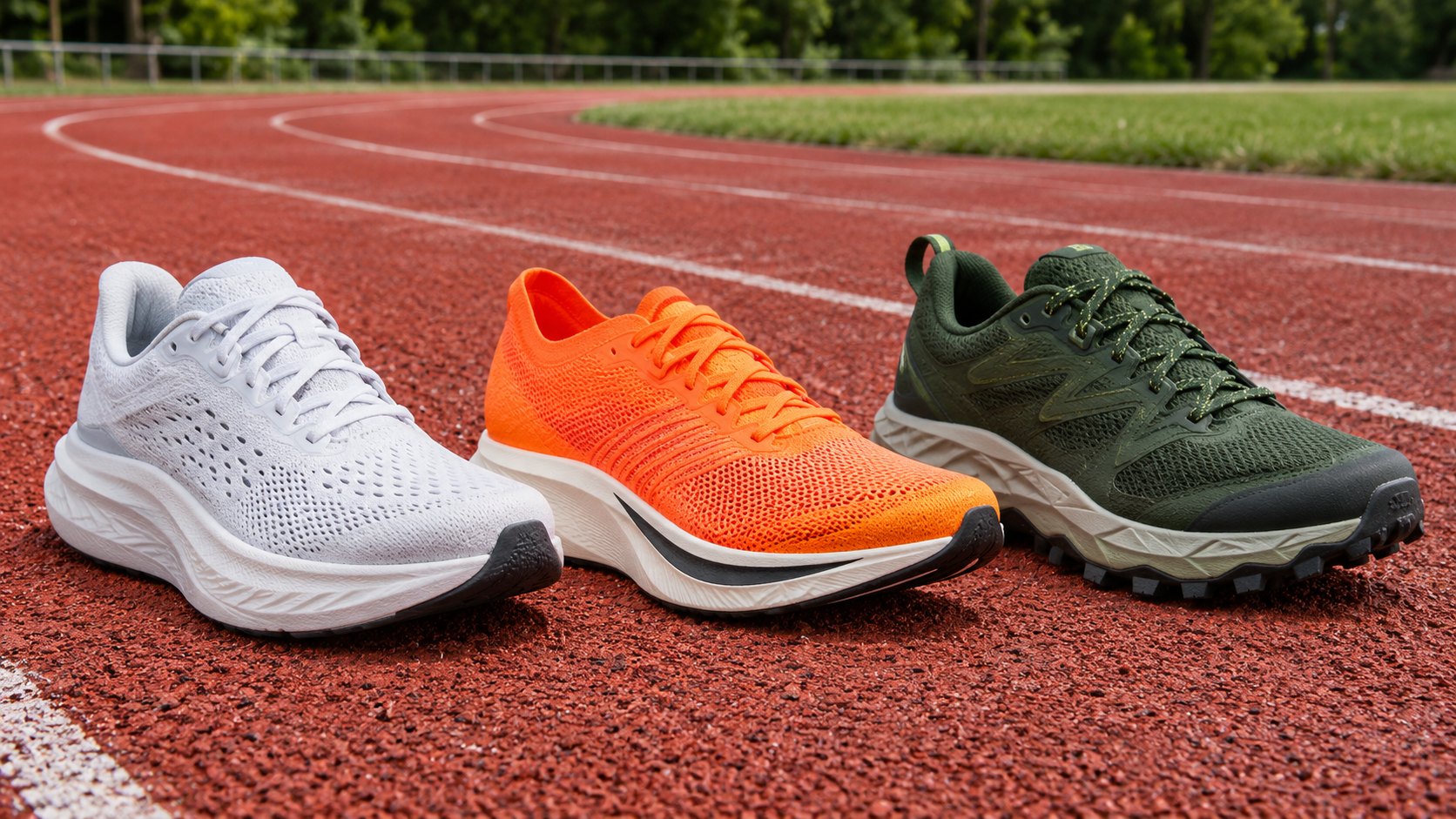
Walk into any running store and you will see a wall of shoes that look almost the same. The differences that matter come down to three things: how much cushion you want, how much drop suits you and how the shoe fits your foot.
Cushion
More foam is more comfortable on long runs and on pavement. Less foam gives more ground feel and is better for short, fast efforts. Most people do best with a medium cushion shoe for everyday miles.
Drop
Drop is the height difference between the heel and the forefoot. A higher drop, 8 to 12 mm, takes load off the calves and Achilles. A lower drop, 0 to 6 mm, encourages a midfoot landing but needs a slow transition.
Fit
- Leave a thumb's width in front of your longest toe.
- The heel should not slip when you walk uphill.
- Try shoes in the afternoon, when your feet are slightly larger.
Comfort in the first minute is the best predictor of comfort after a hundred miles.
Replace your shoes every 300 to 500 miles. If your knees start to complain on runs that used to feel easy, check the mileage on your shoes first.


No comments yet - be the first.
Sign in to leave a comment.