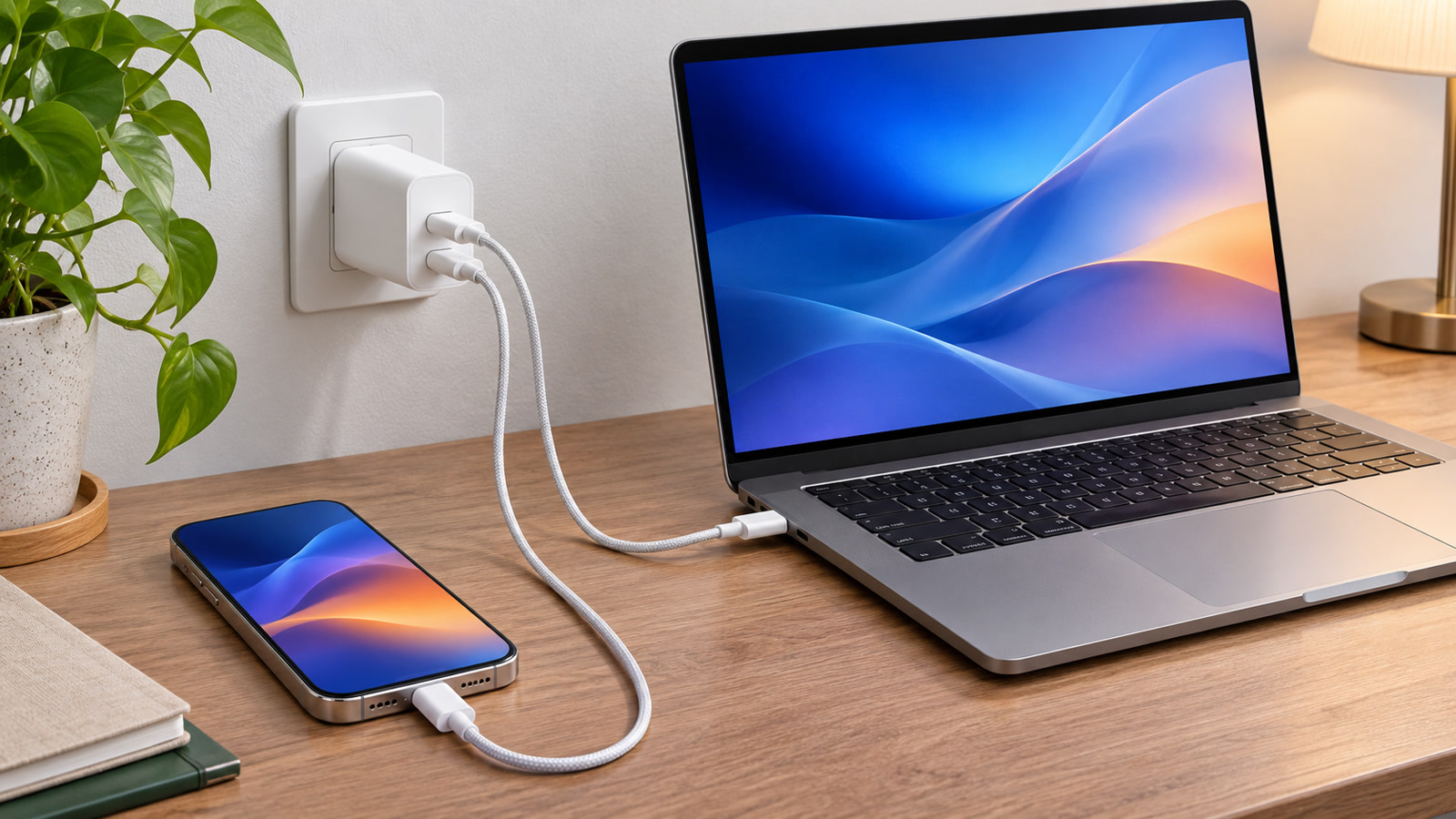
USB-C promised one cable for everything, and it mostly delivered. The confusion is that the connector is the same while what happens inside is not. Three things decide how fast your device charges: the charger, the cable and the device itself.
Watts are what matter
A phone typically draws 20 to 30 watts. A thin laptop wants 45 to 65. A larger one 100 or more. A charger only delivers what it is rated for, so a 20 W phone brick will charge a laptop, but very slowly, and sometimes only when the laptop is asleep.
Not all cables are equal
- Basic cables carry up to 60 W. Fine for phones and most small laptops.
- Cables rated for 100 W or 240 W have a small chip that tells the charger it is safe to push more.
- Data speed is a separate story. A charging cable can be slow for file transfers.
One charger for the whole bag
A single 65 W charger with two ports covers a phone and a laptop for most people. If you travel with a tablet too, look at a 100 W model with three ports and check how it splits power when everything is plugged in.
Buy one good cable and label it. Throw out the mystery cables in the drawer. You will save more time than money.
If a device charges slowly, swap the cable first. It is the cheapest fix and the most common culprit.

No comments yet - be the first.
Sign in to leave a comment.